




Spending quality time with children at home is a great way to support both their mental and physical development. Thanks to the games to be played with children at home, you can improve their attention, memory, focus and problem solving skills in a fun way. These games, which are recommended by psychologists, will contribute to children's motor and cognitive development and will also help you have pleasant moments together. Here are 5 educational and fun games to play with children at home:
1. Item Recall Game (Memory Improvement)
In this game, place 5-6 small toys or objects in front of your child. Ask your child to examine these objects carefully. Then hide an object by making them close their eyes and make them guess which object is missing. This game strengthens children's memory and attention skills. It also helps them develop their ability to focus. Such memory games contribute to children's learning processes, especially in the preschool period.
Games to play at home with children Alternative Variation:
You can make the game more difficult by increasing the number of objects or make it more dynamic by adding a time limit. You can also improve children's visual perception skills by using colourful and different shaped objects.
2. Stop Start Game (For Focus and Control Skills)
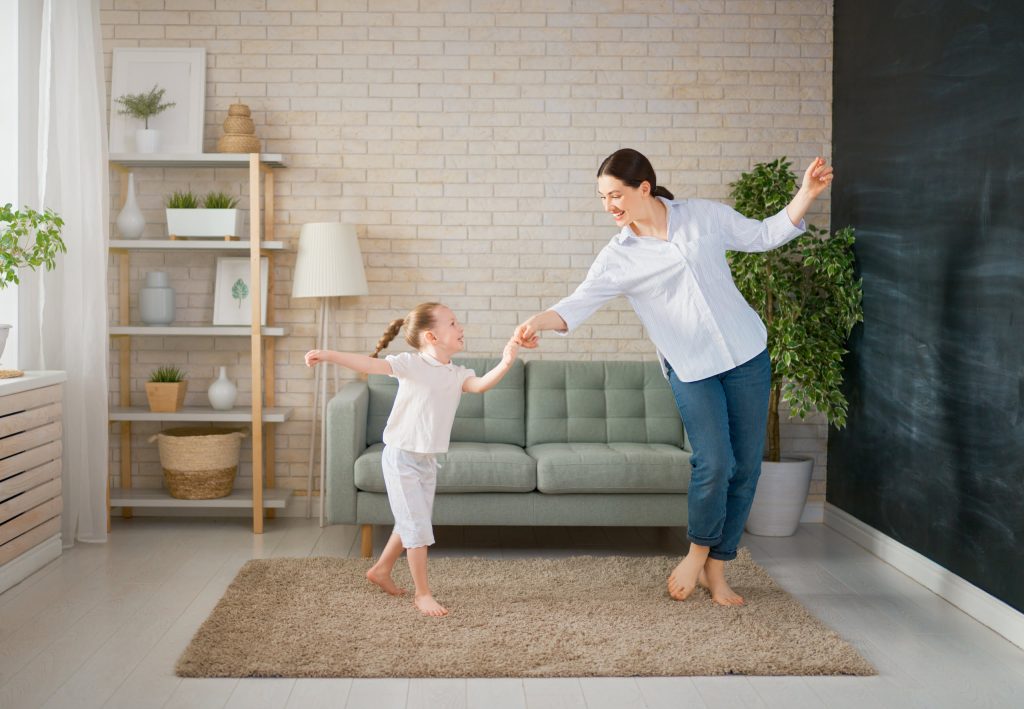
Start the music and ask your child to dance. When you stop the music, your child needs to stay still. Then start the music again. This game is an exercise that allows children to release their energy, while at the same time improving their attention and reflex skills. The fact that your child likes to dance and move to music makes this game both fun and educational for them.
Developmental Benefits:
This game helps to develop focus and self-control, especially for younger children. In addition, the combination of music and movement supports children's coordination and motor skills.
3. Robust and Broken Robot Game (Problem Solving Skills)
Give your child the role of two different robots: a robust robot and a broken robot. The robust robot performs every command correctly, while the broken robot performs some commands incorrectly. Let your child recognise these differences and guess which commands are done correctly. This game is a great activity for developing problem-solving skills. By analysing different results, children learn the difference between right and wrong.
Alternative Ways to Play:
You can add different commands to increase the difficulty level of the game. You can also make your child the game leader and let them give commands, which will develop leadership and responsibility skills.
4. Guess the Game (Touch and Recognition Skills)
Have your child close his/her eyes and give him/her an object. Ask him/her to guess what this object is by touching it. This game develops children's sense of touch and increases their ability to recognise objects. You can make the game more fun and instructive by choosing objects from different categories (e.g. kitchen utensils, toys).
Developmental Contribution:
The ability to recognise by touch develops children's sensory perception and contributes to their learning process. In addition, this game supports children's problem solving and logical thinking abilities.
5. Creative Storytelling Game (Developing Imagination)
Identify an object (e.g. a pencil, toy or book) and ask your child to create a story around this object. Storytelling contributes to children's language development and also strengthens their imagination. Allow your child to let his/her imagination run wild and ask him/her questions to elaborate the story further.
Storytelling and Language Development:
Creative storytelling games expand children's vocabulary and develop their expressive skills. At the same time, they also support their ability to construct plots and put their thoughts together in a logical way.
Conclusion
Playing games with children at home not only helps them have fun, but also supports their cognitive and motor development. Children acquire new skills, improve their problem-solving skills and have fun while learning. In addition to keeping your children's minds active, these games also contribute to their social, emotional and physical development.
As parents, you can build a deeper bond with your children through these games. You can help children discover their creative side, increase their self-confidence and develop their emotional intelligence. At the same time, you can strengthen communication within the family by making the time spent at home more productive and enjoyable.
While applying these games, you can observe in which areas your children are strong and which skills they need to develop more, and help them discover their different talents with each game. Thus, by supporting their individual development, you can contribute to their becoming happy and healthy individuals.
Remember that play is one of the ways children discover, learn and make sense of the world. Therefore, having positive effects on their development process while playing games offers gains that will continue throughout their lives. Turn these precious moments with your child into a learning opportunity and enjoy having fun together!